
Can Pregnancy Occur with Polycystic Ovary Syndrome (PCOS)?
A large percentage of women lately are affected by Polycystic Ovary Syndrome (PCOS), which causes delayed conception for many due to irregular ovulation and hormonal imbalance. Therefore, it was necessary to find out whether pregnancy is possible with PCOS and how to overcome it. This is what we will clarify below.
What You Need to Know About Polycystic Ovary Syndrome
Polycystic Ovary Syndrome (PCOS) is a hormonal disorder faced by many women, causing problems with menstrual regularity, cycle length, or increased levels of male hormones.
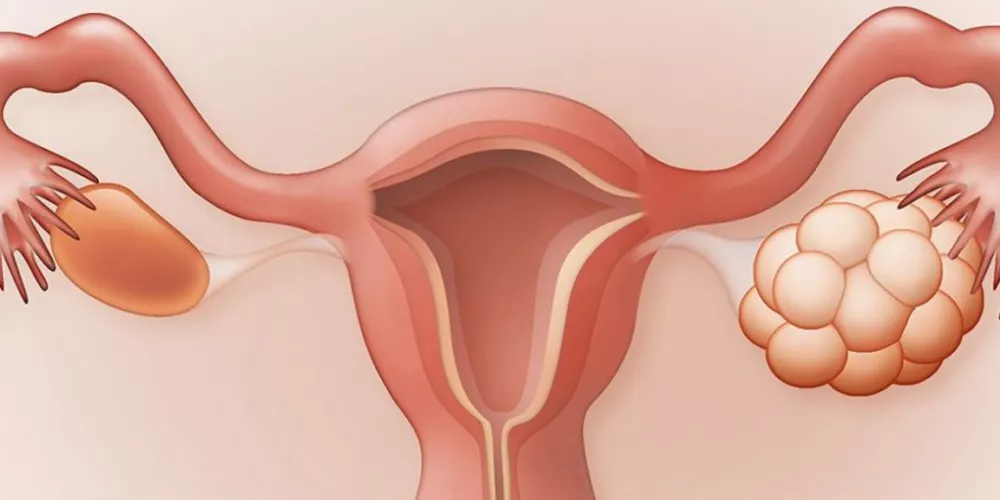
A woman has two ovaries, each located on either side of the uterus. Each ovary is roughly the size and shape of an almond, where eggs grow, are produced, and released in monthly cycles during a woman’s reproductive years.
In PCOS, the ovaries develop multiple small fluid-filled sacs (cysts) on or within them.
Symptoms of Polycystic Ovary Syndrome
If you desire pregnancy and want to know if pregnancy can occur with PCOS, you should know that with ovarian cysts, most of the time, a woman feels only slight discomfort or nothing at all. They usually cause no harm, and most cysts disappear without treatment within a few months.
However, a large ovarian cyst may cause:
Intermittent pelvic pain with a dull or sharp ache in the area below the navel on one side.
Feeling of pressure, fullness, or heaviness in the abdomen.
Bloating.
If any of the following symptoms appear, you should consult your doctor:
Severe, sudden abdominal or pelvic pain.
Pain accompanied by vomiting or fever.
Signs of shock, including cold, clammy skin, rapid breathing, dizziness, and weakness.
Causes of Polycystic Ovary Syndrome
If you want to know the answer to your question about whether pregnancy can occur with PCOS, you can first learn about the causes of PCOS to be able to treat it correctly.
Most ovarian cysts form due to the menstrual cycle and are known as functional cysts. There are other, less common types.
As for functional cysts, small cysts called follicles grow in the ovaries each month. The follicles produce estrogen and progesterone and rupture to release one egg at the time of ovulation.
The monthly follicle that continues to grow is known as a functional cyst and is of two types:
Follicular Cyst: In this type, the egg is released from the follicle containing it in the middle of the menstrual cycle, then travels to the fallopian tube. A follicular cyst forms when the follicle does not rupture, meaning it does not release the egg and continues to grow.
Corpus Luteum Cyst: After releasing the egg, the follicle shrinks and begins producing estrogen and progesterone to prepare for pregnancy. At this stage, it is called the corpus luteum. Sometimes, the opening from which the egg exited becomes sealed, and fluid accumulates inside the corpus luteum, causing a cyst.
These functional cysts are usually harmless, rarely cause pain, and often disappear on their own within two to three menstrual cycles.
There are other causes of cysts unrelated to the menstrual cycle, including:
Dermoid Cysts: Also called teratomas, these form from germ cells that produce eggs in the ovary. They may contain tissues like hair, skin, or teeth and are rarely cancerous.
Cystadenomas: These cysts develop from cells on the surface of the ovary and can be filled with a watery or mucous material. Cystadenomas can grow very large.
Dermoid cysts and cystadenomas can become large and displace the ovary from its position. This increases the likelihood of a painful twisting of the ovary called ovarian torsion, which may reduce or completely block blood flow to the ovary.
Can Pregnancy Occur with Polycystic Ovary Syndrome?
In the menstrual cycle of women without PCOS, a number of eggs mature inside follicles in the ovaries, and the most mature egg is released through one of the fallopian tubes to meet sperm if present.
When many women wonder if ovulation occurs with PCOS, it should be known that in PCOS, although polycystic ovaries contain follicles with eggs, the follicles do not grow and mature properly. Therefore, there is no ovulation or egg release in some months, which is known as anovulation.
Ovulation is known to occur with PCOS but irregularly, as most women with PCOS suffer from an irregular menstrual cycle.
However, with proper treatment and guidance from a specialist doctor, pregnancy can become possible by receiving the right type of fertility treatments, medications, and even assisted reproductive technologies like IVF.
Causes Leading to Delayed Pregnancy
There are various reasons for delayed pregnancy or infertility in couples, some due to disorders in the woman and others due to disorders in the man.
Causes specific to delayed pregnancy in women fall under the most important factors and conditions:
Age: As a woman ages, fertility declines, and the number and quality of eggs decrease.
Obesity.
Hormonal disorders such as ovarian cysts and Polycystic Ovary Syndrome, which is the most common cause of delayed pregnancy in women.
Premature ovarian failure, where the ovaries stop working normally before age 40.
Smoking.
Methods for Diagnosing Polycystic Ovary Syndrome
Prevention is always better than cure. Therefore, you can check on your feminine health by following the diagnostic methods below with a specialist doctor to ensure you are not affected by PCOS and to get appropriate medical consultation if diagnosed with ovarian cysts.
Ovarian cysts can be discovered through a pelvic exam or an imaging test like a pelvic ultrasound. Depending on the cyst’s size and whether it is solid or fluid-filled, the doctor will perform the necessary tests to determine the type and if it needs treatment. These tests include:
Pelvic Ultrasound: A wand-like device sends and receives high-frequency sound waves to create an image of the uterus and ovaries on a video screen. The image is used to confirm if you have an ovarian cyst, locate it, and determine if it is solid or fluid-filled.
It can also be diagnosed through Laparoscopy: The doctor inserts a thin, lighted instrument into the abdomen through a small incision using a laparoscope. The doctor can see the ovaries to check for any cysts and may perform treatment during the same procedure. This is a surgical procedure requiring anesthesia.